
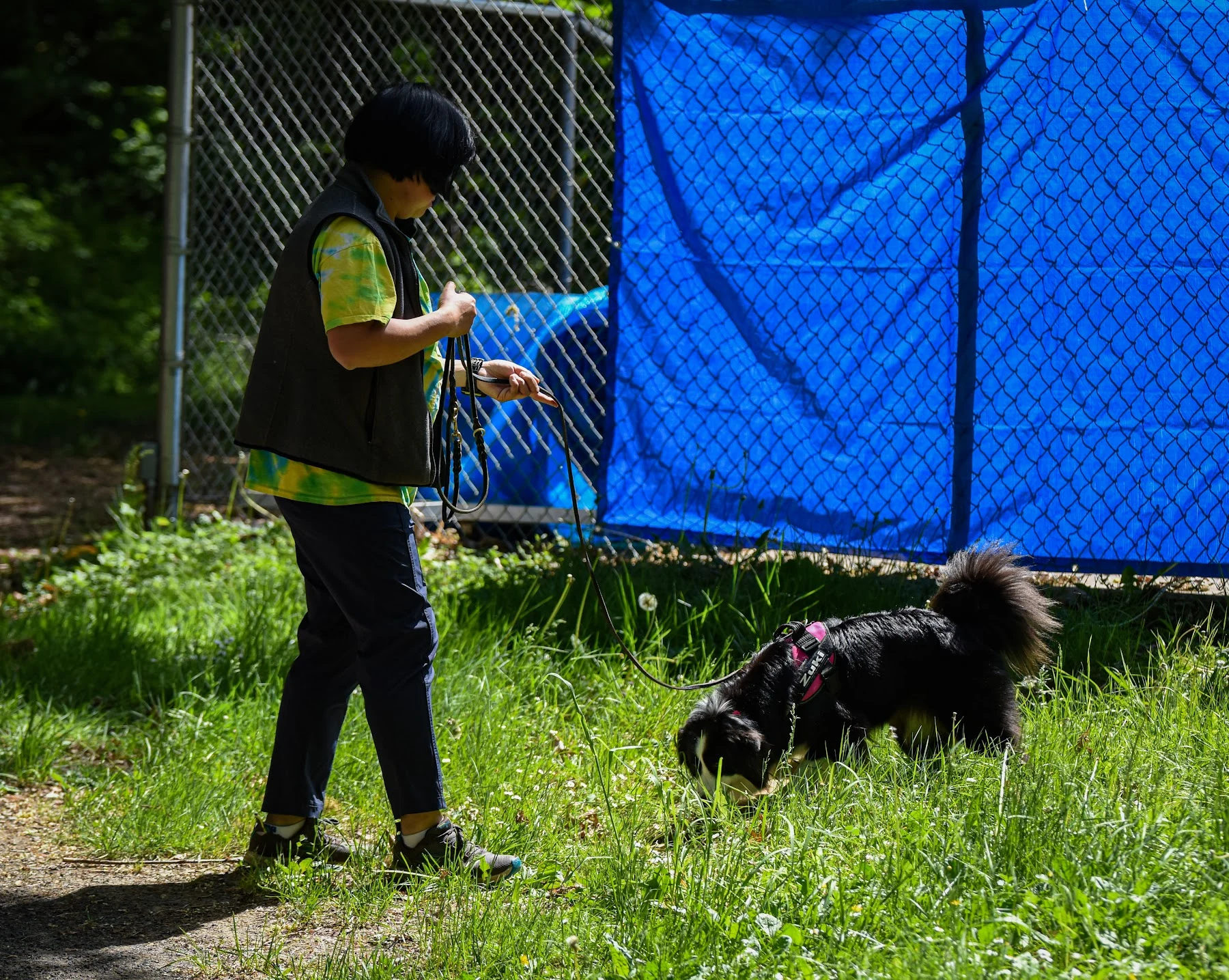
Have you ever noticed how uncomfortable we become when our dogs haven’t found anything for a while?
Thirty seconds go by. Nothing.
Another thirty seconds. Still nothing.
We start wondering whether we’ve missed something. Maybe we should revisit that corner, change direction, encourage the dog, or take a cookie break.
But here’s a question worth asking:
Is the dog struggling, or are we?
We talk a lot about building persistence in our dogs, teaching them to keep hunting when odor isn’t immediately available. But I wonder whether we’ve spent nearly as much time developing that same patience in ourselves.
Think about how we train.
If our dogs routinely find hides every 15 or 20 seconds, we become accustomed to that rhythm too. Each find gives us a little reassurance that things are going well.
Then we encounter a large search area with sparse hides, or perhaps no hides at all.
The dog may still be happily hunting, investigating the environment and working through the available information.
Meanwhile, our internal reward clock is ticking.
And when that clock runs out, our handling changes.
We start moving differently, suggesting areas, interrupting the dog’s process, or offering help that wasn’t actually needed.
Sometimes the dog hasn’t lost confidence in the search. We’ve lost confidence in the dog.
But I think there’s another side to this.
The solution isn’t simply to make every training search longer, harder, or more frustrating.
I don’t want a dog who has merely learned to tolerate searching without success.
I want a dog who genuinely loves the experience of hunting.
A dog who finds satisfaction in exploring, investigating, following an odor problem, and figuring things out—not just collecting a cookie at the end.
That enthusiasm is something we build through thoughtful training. Plenty of opportunities for success, clarity about what pays, and challenges that grow with the dog’s ability.
Long gaps between hides and blank searches have their place, but they should develop confidence and persistence, not simply test how long a dog will keep going.
And we need to recognize the difference between a dog who’s productively working through a challenge and one who’s becoming frustrated or disengaged.
Sometimes the right choice is to let the dog continue.
Sometimes it’s to end the search while the dog is still engaged, take a break, and set up a clearer opportunity for success.
The decision should come from what the dog is telling us, not how long it’s been since we felt rewarded.
That’s where being present, purposeful, and patient comes back into the picture.
Patience isn’t about waiting longer. It’s about knowing what you’re waiting for.
We want dogs who can work independently, persist through uncertainty, and trust their ability to solve problems.
But that partnership asks something of us, too.
We have to become comfortable with the fact that productive searching doesn’t always produce an immediate find.
Maybe the next time our dog hasn’t found anything for a while, instead of asking, “Why isn’t my dog finding something?” we should ask, “What is my dog actually doing, and does my dog need anything from me right now?”
Because sometimes the one who needs to work on their reward clock isn’t the dog.
It’s us.