
Start with Part 1: Your Dog Is Not a Metal Detector
In Part 1, Your Dog Is Not a Metal Detector, I talked about the difference between moving a dog through a search area and allowing the dog to actually search.
But dog-driven searching doesn’t mean blindly following my dog around and never contributing anything.
I want a conversation. A partnership.
There are times when I see an area worth revisiting, recognize something about the environment, or have information that could help my dog.
But here’s the question:
After I make a suggestion, can my dog take the search back?
If I suggest an area and there’s nothing there, can my dog investigate, dismiss it, and move on?
Or does my dog keep searching there simply because I suggested it?
And am I willing to accept my dog’s answer?
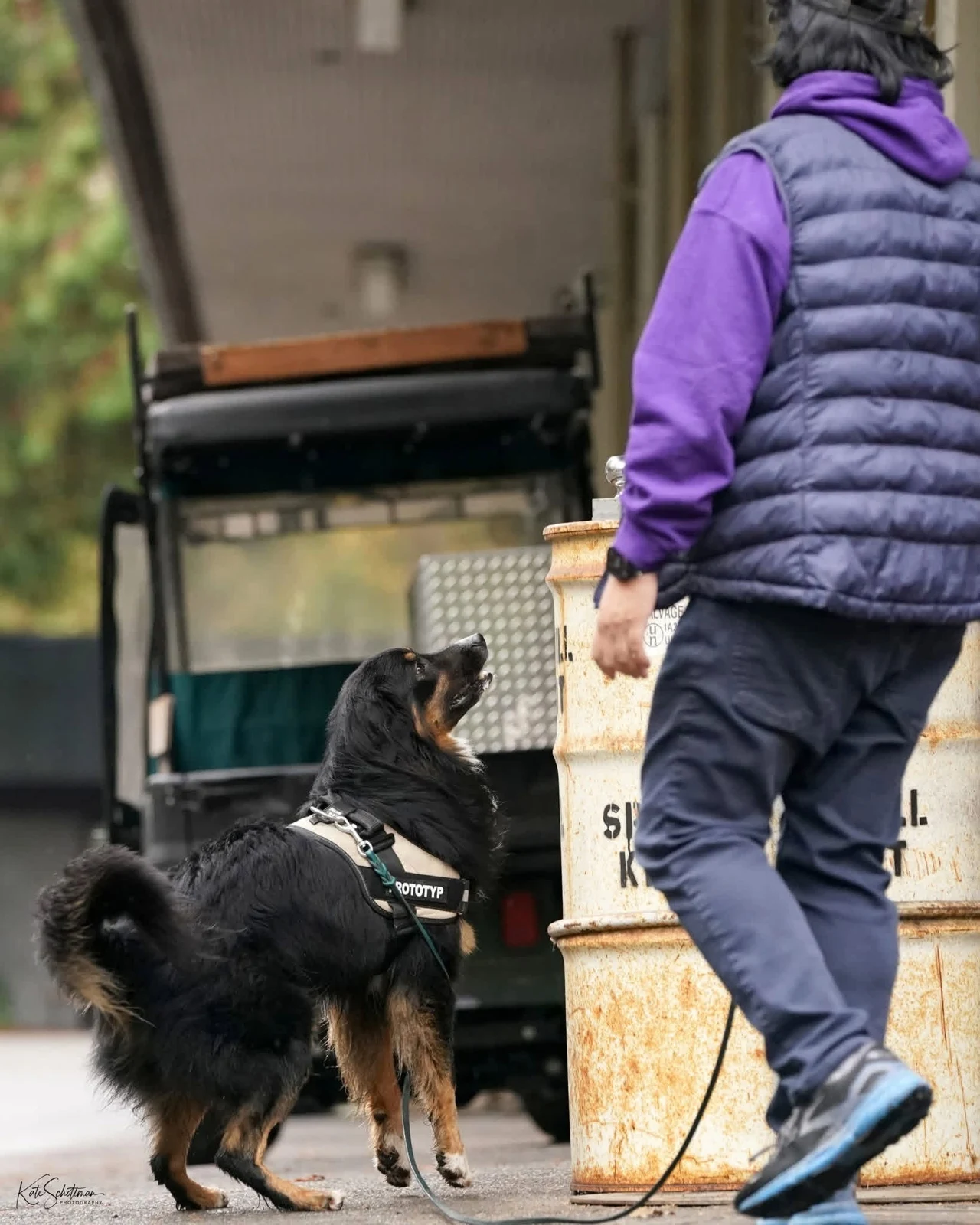
At the Wenatchee AKC trial, I ran Chiron in Master Exterior. We had three minutes and somewhere between one and four hides.
Chiron was actively hunting but wasn’t immediately finding source.
I could have started directing him toward areas that looked promising to me. But I had no useful information about where odor might be.
I chose not to suggest because I had nothing useful to contribute.
That wasn’t passive handling. It was a deliberate decision.
It comes back to three words I’ve been thinking about:
Present. Purposeful. Patient.
Present enough to recognize what my dog is actually doing, rather than what I expect him to do.
Purposeful enough to contribute when I have something useful to offer, rather than intervening just because I feel I should.
Patient enough to let my dog work through a problem, even when I’m uncomfortable with how long it’s taking.
And sometimes that discomfort is exactly what drives our handling.
We point, move, redirect, or revisit areas—not necessarily because the dog needs help, but because we need to feel like we’re doing something.
Even our feet, body position, and leash can become unintended suggestions.
That’s why I want my dog to have the confidence to disagree with me.
My suggestion should be an invitation to investigate, not an instruction to find something there.
If there’s odor, follow it. If there isn’t, move on.
But that independence doesn’t magically appear at a trial. It’s something we have to build through training, by giving our dogs opportunities to make decisions, solve problems, and learn that their information matters.
I don’t want handling to compensate for skills I could have developed through training.
I want handling to add something useful to a dog who already knows how to search.
The goal isn’t to become a handler who never intervenes.
It’s to become a handler whose interventions are worth listening to—and whose dog is confident enough to disagree.
That’s the kind of collaboration I want.
Not a monologue, but a conversation where both partners have a voice—and both are willing to listen.