
We talk a lot about partnership in Nose Work. But what does that actually look like?
Is it a dog working independently while the handler stays out of the way? Is it a handler offering direction when the search becomes challenging? Or is it something that changes depending on the dog, the handler, and the moment?
I’ve come to believe that the best partnerships aren’t defined by how much or how little the handler does. They’re defined by how well both partners understand and respond to each other.
And no two partnerships look quite the same.
Recently, I had the opportunity to see this through three dogs I know very well: Cajun, Jelly Bean, and Chiron.
A Partnership Doesn’t Have to Look Like Mine
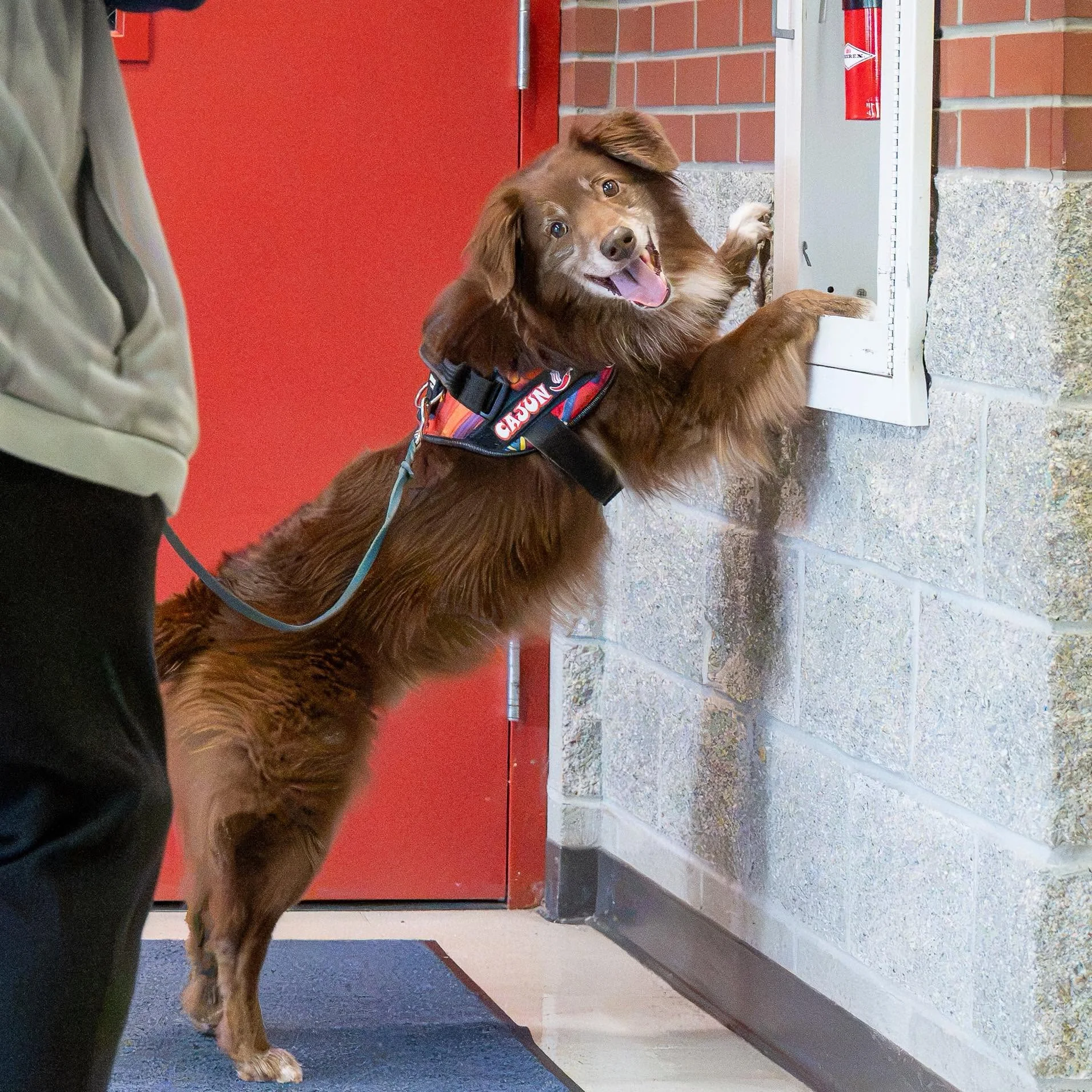
My friend Teresa Fay has handled Cajun at multiple Nose Work trials. Watching them search together is something I genuinely enjoy.
When I first asked Teresa to run him, I wasn’t looking for someone who would handle him exactly as I do. I wanted someone who would appreciate him for who he is, enjoy the game with him, and make the experience rewarding regardless of the outcome.
Cajun loves to search. Teresa loves playing with him. Over time, they’ve developed their own rhythm.
And that’s the beauty of it.
A successful partnership isn’t about following a particular handling style. It’s about understanding the dog in front of you, respecting what they bring to the search, and finding a way to work together.
The same dog can have different, equally meaningful partnerships with different people.
Independence Is Something We Build, Not Something We Demand
With my youngest, Jelly Bean, the relationship is still evolving.
She’s curious, enthusiastic, and increasingly confident in her ability to solve odor problems.
At this stage, I’m especially mindful of how easily a handler can unintentionally take over a search. We want to help. We want to prevent mistakes. We see an area the dog hasn’t checked and feel compelled to direct them toward it.
But every time we intervene, we should ask ourselves whether our help is actually needed.
Am I contributing useful information, or am I interrupting a dog who is perfectly capable of figuring things out?
I want Jelly to learn that her observations matter. That she can explore, make decisions, and even disagree with me.
That confidence doesn’t magically appear when we enter a trial. It’s developed through countless training experiences where the dog is given the opportunity to think and succeed.
Independence isn’t the absence of partnership. It’s one of the things that makes a stronger partnership possible.
Collaboration Is More Than Taking Turns Leading
With Chiron, our relationship has had years to develop.
He has the experience and confidence to work independently, but that doesn’t mean my role is simply to follow him around.
There are moments when he has information I don’t. There are also moments when I may recognize something about the search environment that could help us.
The challenge is knowing when to contribute.
I’ve written before about the importance of being present, purposeful, and patient.
Present enough to recognize what the dog is communicating.
Purposeful enough to offer direction when there’s a reason to do so.
Patient enough to let the dog work through a problem without unnecessary interference.
Sometimes the most valuable thing I can do is offer a suggestion. Sometimes it’s to recognize that Chiron already has a plan and let him carry it through.
And sometimes, when I suggest something, he tells me otherwise.
That disagreement isn’t a failure of teamwork. It may be exactly what good teamwork looks like.
The Dog in Front of You
One of the things I appreciate most about working with different dogs is how much they challenge my assumptions.
What works beautifully with one dog may be unnecessary or even counterproductive with another.
The handler who succeeds with one dog isn’t necessarily the handler another dog needs.
And even within the same partnership, what the dog needs from us today may be different from what they needed six months ago.
This is why I hesitate to define good handling by a single style, whether that’s completely dog-driven searching or a more structured approach.
The question isn’t whether we should lead or follow.
It’s whether we’re paying attention, whether our contributions are useful, and whether we’re allowing the dog to contribute their own knowledge to the search.
Partnership isn’t about making the dog work our way. It’s about learning how to work together without losing what makes each partner valuable.