
Master Interior Debrief — Cascade English Cocker Spaniel Fanciers
October 4, 2026 • Tacoma, WA
Sunday’s Master Interior searches had three areas, each with a possible range of 0–3 hides. The spaces became progressively smaller, but the common challenge was the same: how our assumptions can influence the search.
Room 1 — 3 minutes, 1 hide
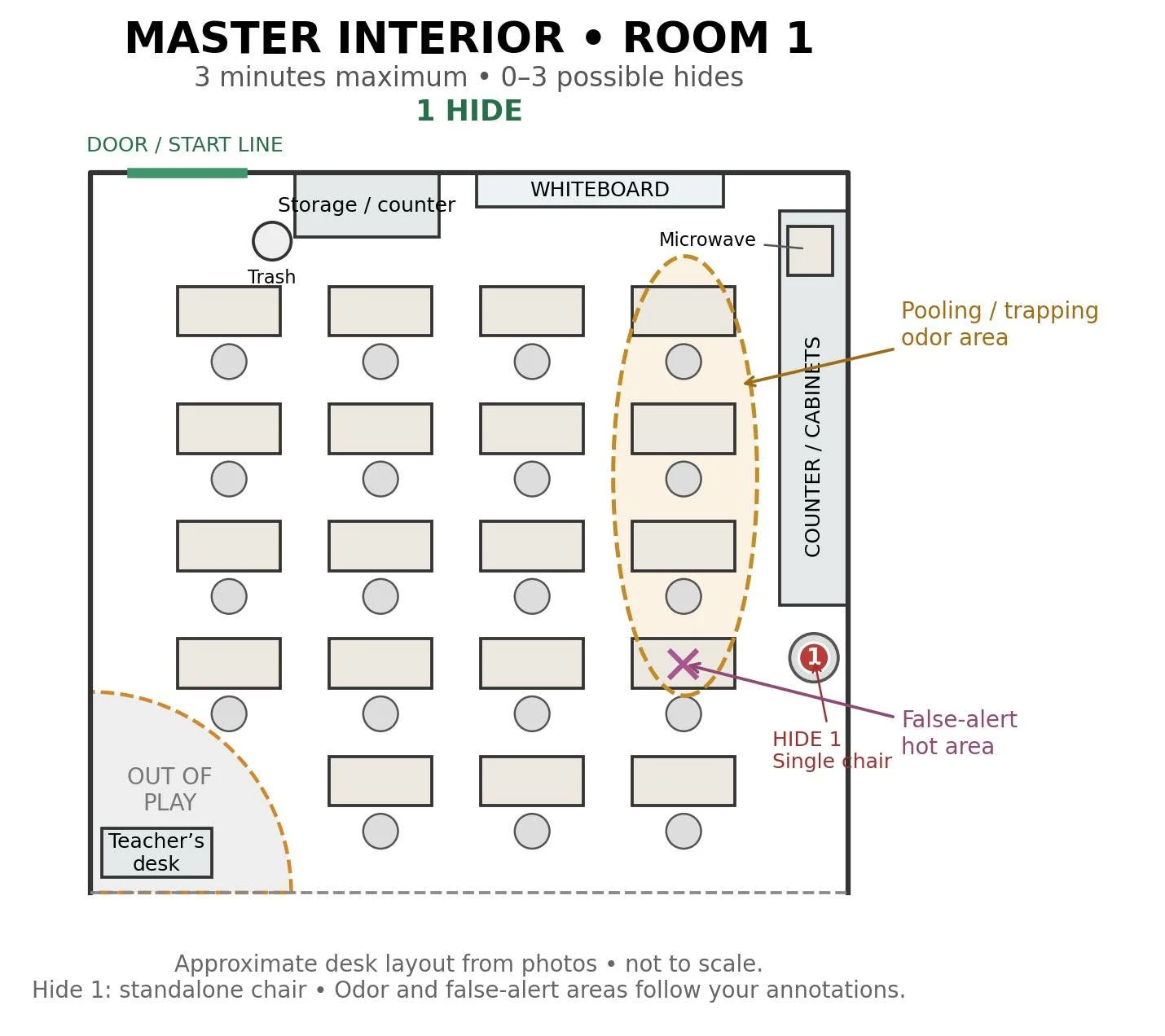
The largest and busiest classroom had everything in play except the teacher’s desk. Its only hide was underneath a standalone chair in the back corner.
The challenge was finding that hide and recognizing that one was all this space contained. A large room with plenty to investigate can make finishing with just one feel difficult!
A few teams called the nearby chair marked on the map. Those dogs clearly communicated to their handlers, but odor was pooling or trapping there rather than originating there. It was a useful reminder to give dogs time and room to work through convincing odor and continue to source.
Here’s a short clip of Willy and Kelsie Swanson working through the pooling odor in Room 1. I love how Kelsie stayed calm and patient, giving Willie time and space to sort it out. A lovely example of supporting the dog while allowing him to work through the odor picture.
Room 2 — 2 minutes, 0 hides
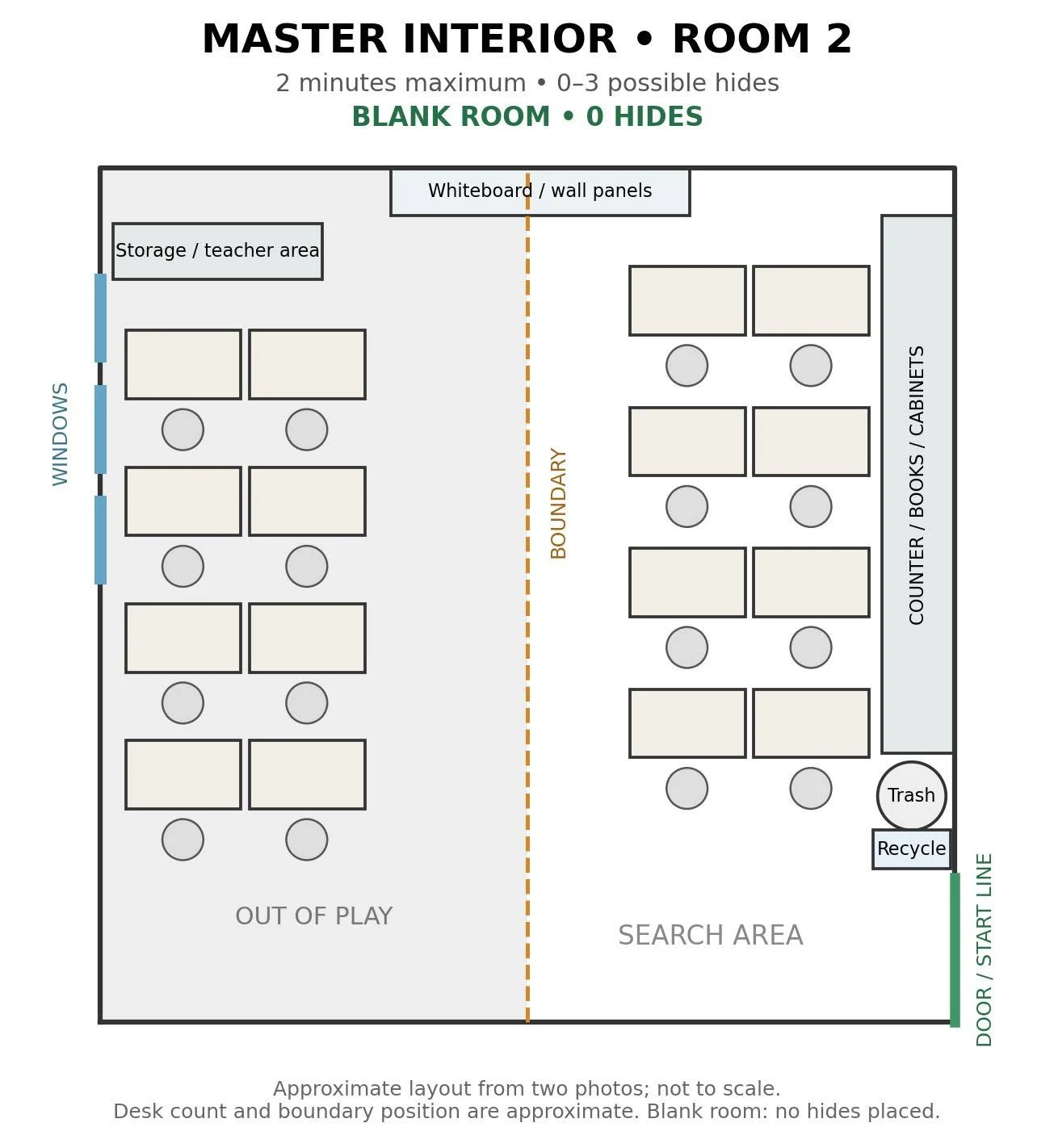
About half of this classroom was in play, and it was blank. Every team that correctly completed Room 1 also correctly cleared Room 2. It was encouraging to see teams confidently accept that there was nothing to find and call Finish.
Room 3 — 2 minutes, 2 hides
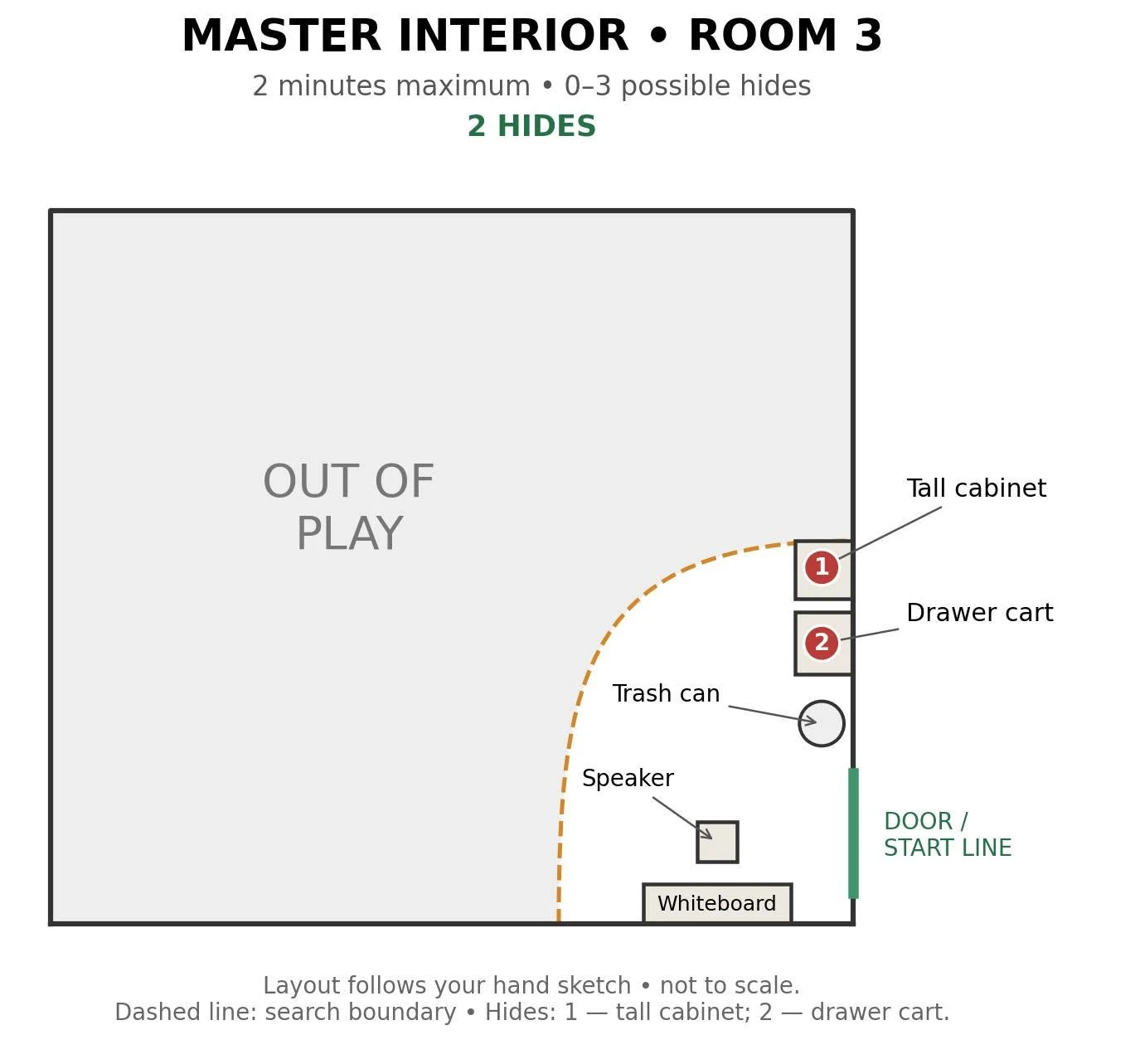
Only about one-quarter of this classroom was in play. This tiny area held two nearby hides: the drawer cart and the tall cabinet.
Every team found at least one, but most missed the second. Many teams investigated the whiteboard and speaker after finding the drawer-cart hide, while the nearby tall cabinet received less investigation. Finding one hide can make the surrounding area feel “already searched,” even when another object still needs attention.
Here’s the demo dog searching Room 3 with Cindi, my volunteer timer. She had never trained or handled a scent work dog—and had never met this dog before the search!
Cindi received the same briefing as the exhibitors: 2 minutes and 0–3 possible hides, without knowing the actual number or locations.
I wonder whether her inexperience helped her here. She may have had fewer expectations about where hides “should” be or how close together they could be, leaving her more open to following the dog’s information.
Experience gives us valuable skills, but it can also give us expectations. The challenge for all of us is to bring those skills while keeping our curiosity.
Thank you, Cindi, for giving it a try!
The largest room had one hide. The middle room had none. The smallest had two.
These are useful challenges for all of us to practice. Our expectations can influence where we suggest our dogs search, what we consider clear, and how we interpret their responses.
The question to carry into training is: are we staying open to what our dogs are telling us, or letting assumptions decide where they should—and shouldn’t—search?
Thank you to everyone who came out to search with their dogs. I hope these maps and observations offer something useful to explore in your next training session!